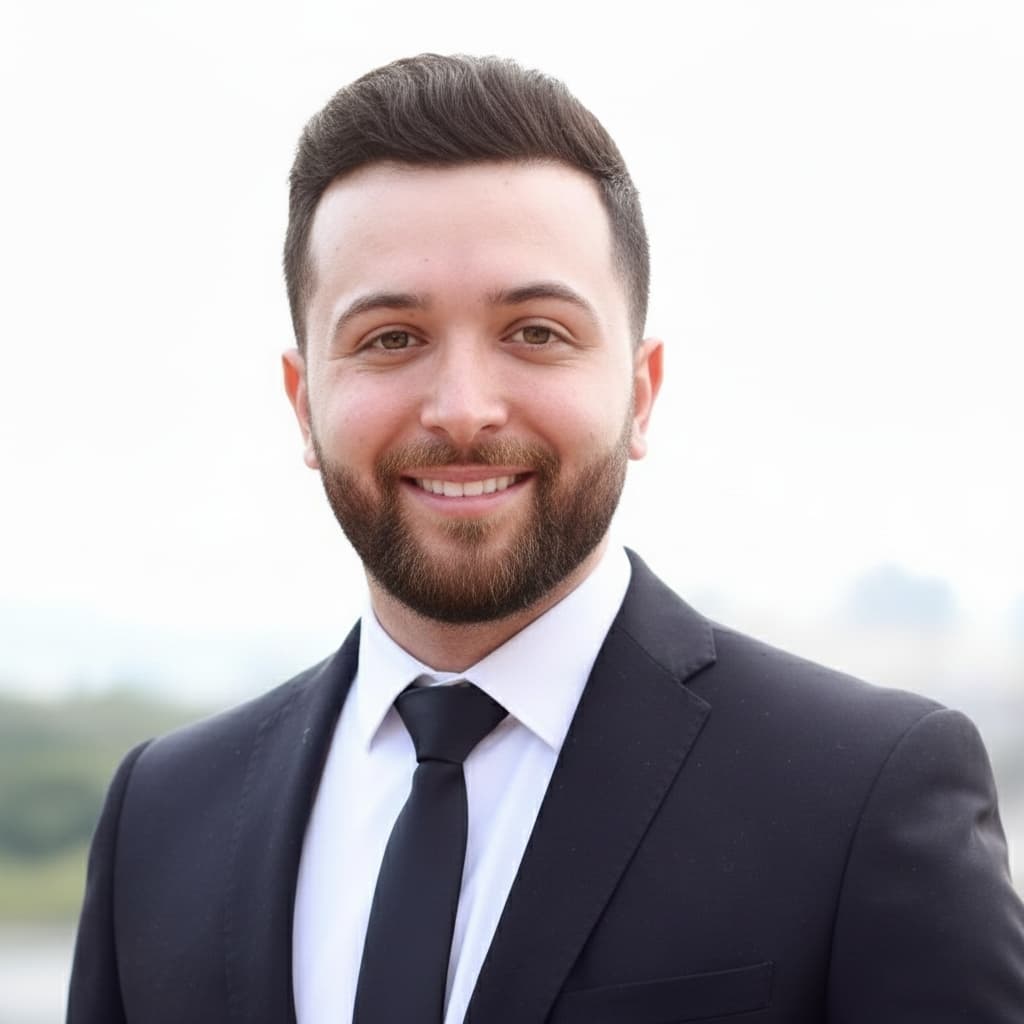
Wholesale Mortgage Broker in SF, Piedmont, Orinda & East Bay, CA [2026]
By Mo Abdel, NMLS #1426884 | Lumin Lending NMLS #2716106 | DRE #02291443 | Updated February 10, 2026
50+ Wholesale Lenders | Jumbo & TIC financing expertise | Estate-level SFR & condo conversion | Licensed in CA & WA
Important Notice: This material is not provided by, nor was it approved by, the Department of Housing & Urban Development (HUD) or by the Federal Housing Administration (FHA). This is not a government agency publication.
Benefits Disclaimer: This information is for educational purposes only. Consult the Social Security Administration or Medicare directly for benefits questions. Mo Abdel is a mortgage professional, not a benefits counselor.
Premium East Bay & San Francisco Wholesale Mortgage Fast Facts (2026)
- San Francisco, Piedmont, Orinda, Lafayette, and Moraga average $1.96M in median home values, placing virtually every purchase transaction in the jumbo financing category where wholesale lender competition produces the greatest borrower savings
- San Francisco recorded 4,812 jumbo purchase originations in Q3 2025, with TIC and condo conversion financing representing 22% of total transaction volume — products most retail banks decline entirely (CoreLogic, 2025)
- Wholesale mortgage pricing in the jumbo space saves borrowers an average of $3,600–$12,000 annually compared to retail bank pricing on $1.5M–$3M loans (AIME industry data, 2025)
- The Lamorinda corridor (Lafayette, Orinda, Moraga) saw a 14% increase in median sale prices during 2025, with 89% of purchase transactions requiring jumbo financing above the $1,209,750 conforming limit (Contra Costa Association of Realtors)
San Francisco and the East Bay's premium corridor operate in a mortgage landscape defined by extreme price variance, diverse property types, and income profiles that range from tech executive RSU packages to creative professional royalties. As a wholesale mortgage broker with access to 50+ Wholesale Lenders — including 50+ jumbo specialists and the select group of lenders who finance TICs and condo conversions — I serve San Francisco, Piedmont, Orinda, Lafayette, and Moraga homebuyers by creating lender competition that delivers better pricing, faster closings, and expert handling of complex property and income scenarios. Every home in this corridor exceeds conforming loan limits, making wholesale jumbo expertise the difference between a single bank's take-it-or-leave-it offer and the best rate available across the entire lending market.
This hub covers wholesale mortgage services across five Premium East Bay and San Francisco communities with a focus on the unique financing challenges each city presents. For the regional perspective, visit our East Bay / SF Wholesale Broker Guide or the statewide California Wholesale Mortgage Broker Guide.
Premium East Bay & San Francisco Wholesale Mortgage Market Overview
Five cities define the premium East Bay and San Francisco mortgage market. Each presents distinct financing requirements driven by property type, buyer demographics, and neighborhood-level price dynamics. The table below profiles the wholesale mortgage landscape for each community.
| City | Median Value | Key Neighborhoods | Borrower Profile | Wholesale Advantage |
|---|---|---|---|---|
| San Francisco | $1,500,000 | Pacific Heights, Marina, Noe Valley, Russian Hill | Tech exec W-2 + RSU, finance professional, dual-income DINK, TIC buyer | TIC/condo conversion specialists, jumbo ARM access, extreme neighborhood price variance |
| Piedmont | $2,500,000 | Piedmont Hills, Wildwood, Piedmont Estates | Family buyer, school-driven, executive W-2, dual-income professional | Estate-level SFR jumbo, school premium financing, $2M+ super-jumbo access |
| Orinda | $2,000,000 | Orinda Village, Glorietta, Sleepy Hollow | SF commuter executive, BART-dependent dual-income, downsizer from SF | Commuter-friendly qualification, rolling hills estate appraisal, large lot financing |
| Lafayette | $2,000,000 | Happy Valley, Trail Neighborhood, Burton Valley | Family buyer, school-premium driven, BART commuter, business owner | Family estate jumbo, BART convenience premium, non-QM for self-employed |
| Moraga | $1,800,000 | Moraga Country Club, Campolindo, Sanders Ranch | Retiree, St. Mary's faculty, family buyer, quiet-lifestyle professional | Retirement income qualification, asset depletion, country club community lending |
Wholesale Broker vs. Retail Bank vs. Direct Lender: East Bay & SF Comparison
San Francisco and the East Bay present three financing channels. The differences are most pronounced in this market because the region's property diversity — TICs, condos, estate SFRs, multi-unit buildings — creates scenarios where product availability varies dramatically between lenders.
| Factor | Wholesale Broker | Retail Bank | Direct/Online Lender |
|---|---|---|---|
| Lender Access | 50+ Wholesale Lenders, 50+ jumbo | 1 lender (own products only) | 1 lender (own products only) |
| Rate Shopping | Automatic — broker shops for you | You must apply at multiple banks | You must compare multiple sites |
| TIC Financing | Access to TIC specialists (group & fractional) | Most banks decline TIC entirely | Rarely available online |
| Condo Conversion | Mid-conversion & post-conversion lenders | Requires completed conversion | Requires completed conversion |
| Super-Jumbo ($2M+) | Full access to $10M+ programs | Limited to bank's portfolio max | Rarely available above $2M |
| Pricing Model | Wholesale (no retail markup) | Retail (includes branch/overhead costs) | Direct (lower overhead, limited products) |
| Self-Employed Solutions | Bank statement, asset depletion, DSCR | Tax returns only (usually) | Limited alternative doc programs |
| Typical Closing Time | 25–35 days | 35–50 days | 30–45 days |
E-E-A-T Insight from Mo Abdel, NMLS #1426884: The wholesale advantage is amplified in the SF/East Bay market because of the region's property type diversity. A Pacific Heights TIC purchase, a Piedmont estate SFR, and a Moraga investment property each require entirely different lender specializations. No single retail bank handles all three competitively. With 50+ Wholesale Lenders, I match each transaction to the lender whose product specialty, underwriting guidelines, and pricing align with the borrower's specific property type and financial profile.
How to Qualify for a Wholesale Jumbo Mortgage in the East Bay & San Francisco
Identify Your Property Type & Financing Need
Determine whether your target property is a single-family residence, TIC, condo, condo conversion, multi-unit, or investment property. Each type requires different lender specialization and qualification criteria. San Francisco buyers must be especially precise — a TIC purchase follows a completely different lending path than a condo purchase in the same building.
Gather Income & Asset Documentation
Prepare 2 years of W-2s and tax returns, 60 days of bank and brokerage statements, and current pay stubs. Self-employed buyers should prepare 12–24 months of bank statements. Borrowers with RSU income need current vesting schedules with stock ticker and vesting dates.
Complete a Compensation & Scenario Analysis
I analyze your complete financial profile to identify which of 50+ Wholesale Lenders offers the most favorable qualification methodology for your specific income type, property type, and purchase scenario. This analysis determines your maximum purchase power and the lenders that produce the best rate-to-qualification combination.
Receive a Market-Competitive Pre-Approval
Based on the lender analysis, you receive a robust pre-approval letter that SF and East Bay listing agents respect. For competitive markets like Piedmont and Noe Valley, this pre-approval signals serious qualification backed by specific lender commitment — not a generic automated approval.
Confirm Credit & Reserve Requirements
Jumbo lenders in this corridor typically require 700+ credit scores and 6–12 months of reserves after closing. Super-jumbo purchases ($2M+ loan amounts) in Piedmont and SF may require 12–18 months of reserves. I identify lenders with the most favorable reserve and credit requirements for your specific scenario.
The Wholesale Mortgage Process: From Application to Closing in the East Bay & SF
Offer Accepted & Lender Competition (Days 1–3)
Once your offer is accepted, I submit your loan profile to competing jumbo lenders and collect rate quotes. You receive a side-by-side comparison showing rates, closing costs, lock terms, and processing timelines. You select the lender with the best overall package and we lock your rate at wholesale pricing.
Appraisal & Title Review (Days 3–14)
The lender orders a full interior appraisal. For San Francisco multi-unit buildings, TICs, and condo conversions, the appraiser must have specific property type expertise. TIC transactions require additional title review to confirm fractional ownership interests. I coordinate all third-party orders to maintain timeline discipline.
Underwriting & Condition Management (Days 10–25)
The underwriter reviews all income documentation, verifies assets, and issues conditional approval. I manage all lender communication, address conditions within 24 hours, and ensure the file moves through underwriting without delays. For complex scenarios — TIC agreements, self-employed income, multi-property ownership — proactive condition packaging prevents back-and-forth that delays closing.
Clear to Close & Funding (Days 25–35)
Final approval is issued, closing documents are prepared, and escrow schedules the signing appointment. Funding occurs on the scheduled closing date per your purchase contract. The typical wholesale jumbo purchase in this corridor closes in 25–35 days — competitive with or faster than retail bank timelines.
Post-Close Support & Future Planning
After closing, I monitor rate markets for refinance opportunities and maintain your file for future transactions. Many SF and East Bay clients return for refinances, equity access through HELOCs, or subsequent purchases as their housing needs evolve. The wholesale relationship provides ongoing rate monitoring across 50+ Wholesale Lenders.
San Francisco: Urban Luxury Condo, TIC/Condo Conversion & Jumbo ARM Financing
| Metric | San Francisco Data |
|---|---|
| Median Home Value | $1,500,000 |
| Typical Loan Amount | $1,100,000–$3,500,000+ |
| Property Types | Condo, TIC, SFR, 2–4 unit, condo conversion |
| Key Neighborhoods | Pacific Heights, Marina, Noe Valley, Russian Hill, SoMa, Mission |
| Wholesale Advantage | TIC/condo conversion specialists, jumbo ARM competition, neighborhood-specific pricing |
San Francisco's $1.5M citywide median masks extreme price variance by neighborhood. A Pacific Heights SFR commands $4M–$8M while a Sunset District home trades at $1.2M–$1.8M. This variance creates distinct financing requirements: a Russian Hill luxury condo purchase at $3.5M requires super-jumbo lender access, while a TIC purchase in the Mission at $800K requires one of the handful of lenders who finance fractional ownership interests. No single retail bank covers both scenarios competitively.
TIC financing is San Francisco's most distinctive mortgage challenge. Tenancy-in-common ownership — where multiple parties share title to a multi-unit building with exclusive-use agreements for individual units — represents thousands of SF residences. Most retail banks decline TIC financing entirely because the legal structure does not conform to standard mortgage guidelines. Wholesale broker access identifies the select lenders who offer TIC-specific programs: group TIC loans (one mortgage shared by all owners with internal allocation agreements) and fractional TIC loans (individual mortgages for each owner's interest). The fractional TIC loan is the gold standard for buyer independence, and wholesale access is the primary channel through which these specialized products are available.
Condo conversion financing adds another layer of SF-specific complexity. San Francisco's lottery-based condo conversion process allows TIC buildings with 2–6 units to convert to condominium ownership, dramatically increasing unit values and opening standard mortgage financing. Wholesale lenders provide bridge financing during the conversion process, interim loans for properties mid-conversion, and permanent jumbo mortgages once the conversion records. Matching the borrower's timeline to a lender with compatible conversion-stage guidelines is a core wholesale broker function in this market.
Jumbo ARMs are disproportionately popular in San Francisco because the city's transient professional population — tech workers on 5–8 year career arcs, finance professionals who rotate between cities, and international executives on assignment — plans to sell or refinance within the ARM's fixed period. A 7/1 jumbo ARM on a $2M Marina condo purchase provides a lower initial rate than a 30-year fixed, saving the borrower thousands annually during the fixed period. Wholesale access to 50+ jumbo ARM programs means comparing initial rates, adjustment caps, index rates, and lifetime caps across multiple lenders to find the optimal ARM structure for each buyer's holding period.
Piedmont: School District Elite, Estate-Level SFR & Millionaire Enclave Financing
| Metric | Piedmont Data |
|---|---|
| Median Home Value | $2,500,000 |
| Typical Loan Amount | $1,800,000–$3,500,000 |
| Property Character | Estate-level SFR, historic homes, large lots, architectural distinction |
| Key Neighborhoods | Piedmont Hills, Wildwood, Piedmont Estates, Crocker Highlands border |
| Wholesale Advantage | Super-jumbo estate lending, school-premium market expertise, historic home appraisal |
Piedmont is entirely surrounded by Oakland yet operates as an independent city with its own school district — and that school district premium drives the $2.5M median to levels that rival communities three times its size. This 1.7-square-mile millionaire enclave attracts family buyers willing to pay estate-level prices for access to Piedmont's top-rated public schools, eliminating the need for private school tuition that runs $35K–$55K per child annually in the Bay Area.
The mortgage challenge in Piedmont is primarily about loan size and property character. Estate-level SFRs on large lots with historic architectural features, mature landscaping, pools, and guest cottages require appraisers experienced with unique property comparisons. A 1920s Tudor Revival on a half-acre lot in Piedmont Hills does not compare directly to Oakland tract homes across the city line — the appraiser must use Piedmont-specific comparables and make appropriate adjustments for architectural distinction and lot size. Wholesale lenders with luxury property experience maintain approved appraiser panels with Piedmont market knowledge, ensuring valuations support the purchase price.
Buyer qualification in Piedmont combines high income with high expenses. Dual-income professional couples earning $400K–$800K combined often carry student loan debt, existing mortgage obligations, and child care expenses that affect debt-to-income ratios. Wholesale lender matching identifies programs with the most favorable DTI limits — some jumbo lenders allow 45% DTI while others cap at 38%. For a Piedmont family earning $600K with $8,000 in monthly obligations, the difference between a 38% and 45% DTI cap translates to $200K+ in additional purchase power. This lender selection is the wholesale broker's core value for Piedmont buyers.
Orinda: BART Corridor Estate & Commuter-Friendly Luxury Financing
| Metric | Orinda Data |
|---|---|
| Median Home Value | $2,000,000 |
| Typical Loan Amount | $1,400,000–$2,500,000 |
| Property Character | Rolling hills estates, ranch-style on 0.5–2+ acres, updated mid-century |
| Key Neighborhoods | Orinda Village, Glorietta, Sleepy Hollow, Orinda Downs |
| Wholesale Advantage | Large-lot estate appraisal, commuter income qualification, rolling hills property assessment |
Orinda occupies a unique position in the East Bay luxury market: estate-level living with direct BART access to downtown San Francisco in under 30 minutes. This combination attracts high-earning SF commuters who want acreage, privacy, and top-rated Acalanes Union High School District schools without sacrificing career access to the city. Orinda Village provides a walkable downtown with restaurants, shops, and the historic Orinda Theatre, while neighborhoods like Sleepy Hollow offer secluded multi-acre estates surrounded by protected open space.
The mortgage consideration specific to Orinda is large-lot estate appraisal. Properties on 1–3+ acre lots in Sleepy Hollow and Orinda Downs present appraisal challenges: comparable sales are limited due to the exclusive nature of the housing stock, and lot-size adjustments on estate properties require experienced luxury appraisers. Wholesale lenders with portfolio jumbo programs accept appraisals with expanded comparable areas and manual adjustments that automated valuation models cannot accommodate. Matching Orinda estate purchases to lenders with appropriate appraisal flexibility is a critical broker function.
Glorietta and Orinda Village buyers often combine SF commuter income (W-2 + RSU from tech or finance employers) with secondary income from investment portfolios, rental properties, or consulting work. Wholesale lender matching ensures the most favorable treatment of each income stream. A financial services executive earning $350K base + $150K bonus + $80K in rental income qualifies for vastly different loan amounts depending on how the lender treats bonus averaging and rental income offset calculations. Wholesale access identifies the lender whose methodology maximizes the combined qualifying income.
Lafayette: Lamorinda Living, Family Estate & School-Premium Financing
| Metric | Lafayette Data |
|---|---|
| Median Home Value | $2,000,000 |
| Typical Loan Amount | $1,400,000–$2,400,000 |
| Property Character | Family estates, updated ranches, trail-adjacent, BART-accessible |
| Key Neighborhoods | Happy Valley, Trail Neighborhood, Burton Valley, Reliez Valley |
| Wholesale Advantage | Family purchase qualification, school-premium lending, self-employed non-QM access |
Lafayette anchors the Lamorinda corridor as its most commercially developed community, with a vibrant downtown, direct BART access, and proximity to the Lafayette Reservoir Recreation Area. The $2M median reflects a family-driven market where buyers prioritize Acalanes Union High School District enrollment, trail access for outdoor recreation, and the ability to commute to San Francisco or Walnut Creek's business district within 20–30 minutes. Happy Valley represents Lafayette's estate tier, with properties on multi-acre lots commanding $3M–$5M+, while Burton Valley provides more accessible family homes in the $1.5M–$2.5M range.
Lafayette's buyer profile includes a significant self-employed and business owner population. The Trail Neighborhood and downtown-adjacent areas attract entrepreneurs, consultants, and professionals who operate businesses from home or nearby offices. These buyers often show lower taxable income on returns compared to their actual cash flow — a situation that standard bank underwriting penalizes. Wholesale bank statement programs use 12–24 months of business or personal bank deposits to calculate qualifying income, bypassing the tax return limitation. For a Lafayette business owner with $45K in average monthly deposits and a 50% expense ratio, the bank statement program calculates $22,500 monthly qualifying income — potentially double or triple the income shown on tax returns.
The BART convenience factor shapes Lafayette's mortgage landscape. Many buyers relocate from San Francisco seeking more space for growing families, maintaining their SF employment. This transition creates qualification scenarios involving new address with existing employer, bridge loans for SF property sales, and dual-property ownership during the transition period. Wholesale lenders experienced with relocation financing accommodate these transitional scenarios with flexible guidelines around subject property occupancy, departure residence treatment, and bridge loan structures that facilitate smooth SF-to-Lafayette transitions.
Moraga: St. Mary's College Town, Quiet Estate & Retirement Financing
| Metric | Moraga Data |
|---|---|
| Median Home Value | $1,800,000 |
| Typical Loan Amount | $1,200,000–$1,800,000 |
| Property Character | Country club estates, ranch-style, golf course proximity, college-town quiet |
| Key Neighborhoods | Moraga Country Club, Campolindo, Sanders Ranch, Rheem Valley |
| Wholesale Advantage | Retirement income qualification, asset depletion, DSCR for investment near campus |
Moraga is the quietest of the Lamorinda communities, defined by the presence of Saint Mary's College of California, the Moraga Country Club, and a residential character that prioritizes privacy over commercial activity. The $1.8M median reflects a buyer population that includes retirees downsizing from larger East Bay estates, St. Mary's faculty and administrators, families drawn to Campolindo High School, and investors targeting rental properties near the college campus.
Retirement financing is Moraga's distinctive wholesale mortgage challenge. Buyers who have left full-time employment rely on pension income, Social Security benefits, investment portfolio distributions, and asset reserves for mortgage qualification. Retail banks often struggle with these non-employment income sources because standard underwriting models are designed for W-2 wage earners. Wholesale lenders offer asset depletion programs that convert liquid assets into monthly qualifying income: a retiree with $2.5M in liquid assets qualifies for approximately $6,900–$10,400 monthly income under asset depletion methodology (assets divided by 240–360 months), sufficient to support a $1.8M purchase without traditional employment income.
Sanders Ranch represents Moraga's premium tier: a gated community with estate homes on large lots, community trails, and a residents-only recreation center. Homes in Sanders Ranch command $2M–$3M+, requiring super-jumbo lender access that wholesale channels provide. The gated community's HOA structure, architectural guidelines, and transfer requirements must be evaluated by the lender — a process that experienced jumbo lenders handle routinely but that can delay less experienced retail bank underwriting. Moraga Country Club properties offer golf course living with a country club lifestyle, attracting retirees and semi-retired professionals who combine pension income with part-time consulting or investment management income.
Why a Wholesale Mortgage Broker Defines Premium East Bay & San Francisco Lending
The premium East Bay and San Francisco mortgage market is the most diverse in Northern California. Within a 30-mile radius, borrowers encounter TIC ownership structures unique to San Francisco, estate-level SFR purchases in Piedmont's millionaire enclave, rolling hills acreage in Orinda, family-oriented school-premium purchases in Lafayette, and retirement-focused country club living in Moraga. Each city demands a different lender specialization, and no single retail bank handles all five scenarios competitively.
As a wholesale mortgage broker licensed in California (NMLS #1426884) through Lumin Lending (NMLS #2716106, DRE #02291443), my role is to analyze each borrower's complete financial profile — income type, property type, ownership structure, holding period, and financial goals — and then identify which of 50+ Wholesale Lenders offers the most competitive combination of rate, terms, and underwriting flexibility for that exact scenario. A San Francisco TIC buyer needs a completely different lender than a Piedmont estate purchaser, and both need a different lender than a Moraga retiree using asset depletion.
This lender-matching function creates measurable value across the corridor. A Pacific Heights jumbo ARM buyer receives rate competition from 50+ ARM-capable jumbo lenders rather than accepting one bank's ARM terms. A Piedmont family with $600K combined income and high student loan debt gets matched to the lender with the highest DTI allowance rather than being limited by one bank's conservative ratio caps. An Orinda estate purchase on 2+ acres gets an appraiser from a lender's luxury panel who understands acreage valuation rather than a general-purpose appraiser who undervalues the property.
My direct experience with the East Bay and SF market encompasses every property type and income profile this corridor produces: TIC group and fractional loans in the Mission and Noe Valley, condo conversion bridge financing in SoMa, super-jumbo estate purchases in Piedmont Hills, BART-commuter qualification for Orinda and Lafayette executives, bank statement programs for Lafayette business owners, asset depletion for Moraga retirees, and DSCR investment programs for Bay Area rental property investors. Each closed transaction adds to the pattern recognition that enables faster, more accurate lender matching for future clients.
The coordination role extends beyond lender selection. Premium East Bay and SF purchases involve real estate agents with neighborhood-specific expertise, estate planners, tax advisors, and wealth managers. The wholesale broker serves as the financing specialist within this advisory team, ensuring the mortgage structure aligns with the borrower's broader financial plan. A jumbo ARM that aligns with a planned 7-year holding period, a HELOC that complements an existing investment strategy, or an asset depletion structure that preserves portfolio allocation — these decisions require mortgage expertise integrated with the borrower's complete financial picture.
DSCR Investment Loans: Bay Area Rental Property Opportunities
The Bay Area's rental market supports strong investor activity, and DSCR (Debt Service Coverage Ratio) loans provide the financing mechanism that makes rental property investment accessible without traditional income documentation. DSCR loans qualify based on the property's rental income relative to the mortgage payment — if the property's rent covers the debt service, the borrower qualifies regardless of personal income documentation.
San Francisco's multi-unit housing stock presents the strongest DSCR opportunity in this corridor. 2–4 unit buildings in the Mission, SoMa, and Bayview-Hunters Point generate rental income that supports DSCR ratios of 1.10–1.35x on current market rents, exceeding the 1.0x minimum most DSCR lenders require. For investors purchasing a $1.8M duplex with projected rents of $8,500/month combined, the DSCR calculation determines qualification: $8,500 monthly rent divided by $7,200 monthly PITIA (principal, interest, taxes, insurance, association dues) produces a 1.18 DSCR — qualifying with most wholesale DSCR lenders.
Moraga offers a niche DSCR opportunity near St. Mary's College. Properties within walking distance of campus maintain consistent rental demand from students, visiting faculty, and staff. Lafayette investment properties near BART attract young professional renters who commute to SF. Wholesale access to 40+ DSCR lenders provides program variety: some lenders accept 0.75 DSCR ratios (below breakeven), some offer interest-only DSCR terms for cash flow optimization, and some provide DSCR financing on 5–8 unit buildings that standard residential lenders decline. The wholesale broker identifies the DSCR lender whose ratio requirements, rate structure, and property type allowances align with each investor's specific acquisition.
Regional Price Trends & Loan Fit by Tier: Premium East Bay & San Francisco
| City | 2024 Median | 2025 Median | YoY Change | Avg Days on Market | Jumbo Share |
|---|---|---|---|---|---|
| San Francisco | $1,420,000 | $1,500,000 | +5.6% | 28 | 82% |
| Piedmont | $2,350,000 | $2,500,000 | +6.4% | 14 | 98% |
| Orinda | $1,850,000 | $2,000,000 | +8.1% | 18 | 95% |
| Lafayette | $1,780,000 | $2,000,000 | +12.4% | 16 | 93% |
| Moraga | $1,650,000 | $1,800,000 | +9.1% | 22 | 89% |
Source: California Association of Realtors, Contra Costa Association of Realtors, San Francisco Association of Realtors — 2025 annual data. Jumbo share reflects percentage of financed purchases exceeding the 2026 Alameda/Contra Costa/San Francisco County conforming limit of $1,209,750.
Loan Program Fit by Price Tier
| Price Tier | Typical Cities | Recommended Programs | Down Payment | Wholesale Lenders Available |
|---|---|---|---|---|
| $1.2M–$1.8M | SF (entry), Moraga | Jumbo fixed, jumbo ARM, bank statement | 10%–20% | 50+ jumbo lenders |
| $1.8M–$2.5M | SF (mid), Orinda, Lafayette | Jumbo fixed, jumbo ARM, interest-only jumbo | 15%–25% | 40+ jumbo lenders |
| $2.5M–$4M | Piedmont, SF (Pacific Heights) | Super-jumbo, portfolio jumbo, asset depletion | 20%–25% | 25+ super-jumbo lenders |
| $4M+ | SF (ultra-luxury), Piedmont Hills | Super-jumbo ($10M+), private bank, asset-based | 25%–30% | 15+ ultra-jumbo lenders |
People Also Ask: Wholesale Mortgage Broker in the East Bay & San Francisco
What is a wholesale mortgage broker?
A wholesale broker accesses 50+ Wholesale Lenders to find the best rates and programs, shopping the entire market on your behalf.
How much can I save with a wholesale broker in the East Bay?
East Bay jumbo borrowers typically save $3,600–$12,000 annually on $1.5M–$3M loans through wholesale pricing versus retail bank rates.
Can a wholesale broker finance a San Francisco TIC?
Yes. Wholesale brokers access the select lenders offering group and fractional TIC financing that most retail banks decline entirely.
Do wholesale brokers handle super-jumbo loans for Piedmont estates?
Yes. Wholesale brokers access 25+ super-jumbo lenders with programs from $2M to $10M+ for Piedmont estate purchases.
How do wholesale brokers get paid?
Wholesale brokers are compensated by the lender at 1–2.75% of the loan amount, fully disclosed on your Loan Estimate.
Is it faster to close with a wholesale broker in the East Bay?
Wholesale jumbo purchases close in 25–35 days, competitive with or faster than retail banks at 35–50 days.
Can I use a DSCR loan for a Bay Area rental property?
Yes. DSCR loans qualify on rental income alone, requiring no personal income documentation for Bay Area investment purchases.
What credit score do I need for a jumbo mortgage in the East Bay?
Most jumbo lenders require 700+ credit scores, though some wholesale programs accept 680+ with compensating factors like reserves.
Frequently Asked Questions: Wholesale Mortgage Broker in Premium East Bay & San Francisco
What is a wholesale mortgage broker and how does it help in San Francisco and the East Bay?
A wholesale mortgage broker is a licensed professional who originates loans through wholesale lending channels, accessing 50+ Wholesale Lenders including 50+ jumbo specialists to find the best rates and programs for borrowers. In San Francisco and the East Bay, where jumbo purchases, TIC financing, condo conversions, and estate-level SFR transactions are standard, wholesale broker lender-matching produces better pricing and more flexible underwriting than any single retail bank.
Can a wholesale broker finance a TIC property in San Francisco?
Yes. Tenancy-in-common (TIC) financing is a specialty product that most retail banks decline. Wholesale brokers access the select group of lenders who offer TIC-specific mortgage programs, including group TIC loans where all owners share one mortgage and fractional TIC loans where each owner carries an individual mortgage on their unit. TIC financing is critical in San Francisco where TIC ownership represents a significant share of the multi-unit housing stock.
How does a wholesale broker handle condo conversion financing in SF?
Condo conversion financing requires lenders experienced with San Francisco's lottery-based conversion process. Wholesale brokers identify lenders who finance properties mid-conversion, provide bridge financing during the conversion timeline, and offer permanent mortgage financing once the conversion is recorded. The key is matching the borrower's timeline and property status to a lender whose guidelines accommodate the specific conversion stage.
Are wholesale mortgage rates really better for East Bay jumbo purchases?
Wholesale rates bypass the overhead costs built into retail bank pricing: branch networks, advertising budgets, executive compensation, and shareholder profit requirements. In the East Bay's jumbo market where loan amounts routinely exceed $1.5M, rate differences between the best and average lender are wider than in conforming markets. Shopping 50+ jumbo lenders through a wholesale broker consistently identifies pricing advantages over single-institution offers.
What is a jumbo ARM and why is it popular in San Francisco?
A jumbo adjustable-rate mortgage (ARM) offers a fixed rate for an initial period (typically 5, 7, or 10 years) before adjusting based on market indices. In San Francisco where the median home price is $1.5M and many buyers plan to sell or refinance within 7–10 years, jumbo ARMs provide lower initial rates compared to 30-year fixed products. Wholesale brokers access ARM programs from 50+ jumbo lenders with varying adjustment caps, index rates, and initial fixed periods.
Can a wholesale broker help with a Piedmont estate purchase over $2 million?
Yes. Piedmont's $2.5M median home value means virtually every purchase requires jumbo or super-jumbo financing. Wholesale brokers access lenders with portfolio jumbo programs designed for estate-level properties, including programs that finance homes on large lots, properties with guest houses or ADUs, and homes requiring specialized appraisal approaches due to unique architectural or historical features.
How do I qualify for a mortgage in Lafayette or Orinda with variable income?
Lafayette and Orinda buyers with variable income from commissions, bonuses, self-employment, or investment returns qualify through wholesale lender programs designed for non-standard income documentation. Bank statement programs use 12–24 months of deposits instead of tax returns. Asset depletion programs convert liquid assets into qualifying income. CPA-verified income letters supplement tax return documentation. Wholesale access to 50+ Wholesale Lenders ensures the most favorable qualification method for your specific income profile.
What is the closing timeline for a jumbo purchase in the East Bay?
A wholesale jumbo purchase loan in the East Bay typically closes in 25–35 days from accepted offer. This includes appraisal (7–10 days), underwriting review (5–10 days), and closing preparation (3–5 days). San Francisco TIC and condo conversion transactions may require 35–45 days due to additional documentation and title review. Experienced wholesale lenders familiar with East Bay property types process efficiently, and broker-lender relationships facilitate faster condition resolution.
How much do wholesale brokers charge in fees?
Wholesale brokers are compensated by the lender, typically 1–2.75% of the loan amount. This compensation is fully disclosed on your Loan Estimate, ensuring complete transparency. The total cost of a wholesale loan is typically lower than retail bank alternatives because wholesale pricing starts at a lower baseline before adding broker compensation. There are no hidden fees or additional charges beyond what appears on your closing disclosure.
Can I get a mortgage for a multi-unit property in San Francisco through a wholesale broker?
Yes. San Francisco's multi-unit housing stock — including 2–4 unit buildings, TICs, and condominiums — is well-served by wholesale lenders. Owner-occupied 2–4 unit purchases qualify for residential mortgage programs with competitive rates. Non-owner-occupied multi-unit purchases qualify through DSCR (debt service coverage ratio) programs that use rental income for qualification. Wholesale access provides both residential and investment multi-unit programs from 50+ Wholesale Lenders.
What documentation do I need for a jumbo mortgage in the East Bay?
Standard jumbo mortgage documentation includes 2 years of W-2s and tax returns, 60 days of bank/brokerage statements, employment verification, and property insurance. Self-employed borrowers may substitute 12–24 months of bank statements through bank statement programs. San Francisco TIC purchases require additional documentation including the TIC agreement and group or fractional loan terms. The specific requirements vary by lender and program, which is why broker guidance ensures you provide exactly what your selected lender requires.
Is Moraga a good area for investment property purchases through DSCR loans?
Moraga presents a strong DSCR investment opportunity due to stable rental demand from St. Mary's College students, faculty, and staff. Properties near campus and in Sanders Ranch maintain consistent occupancy rates. DSCR loans qualify based on the property's rental income divided by the mortgage payment, requiring no personal income documentation. Wholesale brokers access 40+ DSCR lenders with varying ratio requirements, rate structures, and property type allowances for Moraga investment purchases.
Related Premium East Bay / SF & California Mortgage Resources
Premium East Bay / SF Home Equity Guide
HELOC, HELOAN, and cash-out refinance for accessing equity in SF, Piedmont, Orinda, Lafayette, and Moraga properties.
Premium East Bay / SF Reverse Mortgage Guide
HECM and jumbo reverse mortgage options for East Bay and SF homeowners 62+ with $1.5M–$2.5M in home equity.
East Bay / SF Wholesale Broker Guide
Regional wholesale mortgage overview for the entire East Bay and San Francisco corridor.
California Wholesale Mortgage Broker Guide
Statewide overview of wholesale mortgage advantages with metro-by-metro lending insights.
For detailed product comparisons, see our Wholesale vs. Retail Mortgage Guide and Bank Statement Loans for Self-Employed guide.
Expert Summary: Wholesale Mortgage Broker in Premium East Bay & San Francisco
The premium East Bay and San Francisco corridor averages $1.96M in median home values across five cities with radically different property types and buyer profiles. San Francisco's TIC/condo conversion market, Piedmont's estate-level SFR enclave, Orinda's BART corridor estates, Lafayette's school-premium family market, and Moraga's retirement-focused country club community each require specialized lender matching that no single retail bank provides. Wholesale broker access to 50+ Wholesale Lenders — including TIC specialists, super-jumbo lenders, bank statement programs, asset depletion qualification, and DSCR investment products — creates the competitive environment that produces better rates, higher qualification amounts, and faster closings for every transaction type in this corridor.
The core value: lender matching based on property type and borrower profile. A TIC buyer in the Mission needs a fundamentally different lender than a Piedmont estate purchaser, and both need a different lender than a Moraga retiree using asset depletion or a San Francisco investor using DSCR financing. Wholesale access provides the product breadth and rate competition that transforms complex financing scenarios into closed transactions at optimal pricing.
As your wholesale mortgage broker, I deliver 50+ Wholesale Lenders, TIC/condo conversion expertise, super-jumbo access, and specialized qualification for every income type and property type in this corridor. Call (949) 579-2057 for your free scenario analysis and pre-approval.
Get Your Free East Bay & SF Mortgage Pre-Approval
Ready to explore how wholesale broker access to 50+ Wholesale Lenders maximizes your purchasing power in San Francisco, Piedmont, Orinda, Lafayette, or Moraga? Contact Mo Abdel for a free, no-obligation scenario analysis and pre-approval. Within 48 hours, you receive a full income and property qualification showing the optimal lender match for your specific purchase, complete with rate comparison and closing timeline estimate.
Contact Mo Abdel — East Bay & SF Wholesale Mortgage Specialist
Phone: (949) 579-2057
Email: mo@mothebroker.com
NMLS #1426884 | Lumin Lending NMLS #2716106 | DRE #02291443
Licensed in California and Washington | Serving all Premium East Bay & San Francisco communities
Wholesale broker with 50+ Wholesale Lenders | TIC, condo conversion, jumbo ARM & estate SFR specialist
Equal Housing Lender. All loans subject to credit approval. This is not a commitment to lend. Rates, terms, and qualification requirements vary by lender, credit profile, and property characteristics. Jumbo and super-jumbo products have specific qualification requirements that differ from conforming programs. TIC and condo conversion financing is subject to property eligibility, legal structure review, and lender-specific guidelines; not all properties qualify. DSCR loans are for investment properties only and require minimum debt service coverage ratios that vary by lender. Bank statement loan programs have specific eligibility requirements. Savings estimates are based on market data and vary by loan amount, credit profile, and rate environment. Closing timelines are estimates and depend on property type, lender processing, and appraisal availability. Market data cited from industry sources including CoreLogic, California Association of Realtors, Contra Costa Association of Realtors, San Francisco Association of Realtors, and AIME; actual market conditions may vary. Information is for educational purposes only and does not constitute financial advice. Scenarios presented are illustrative examples and not guarantees of qualification or terms. Mo Abdel NMLS #1426884. Lumin Lending NMLS #2716106, DRE #02291443.